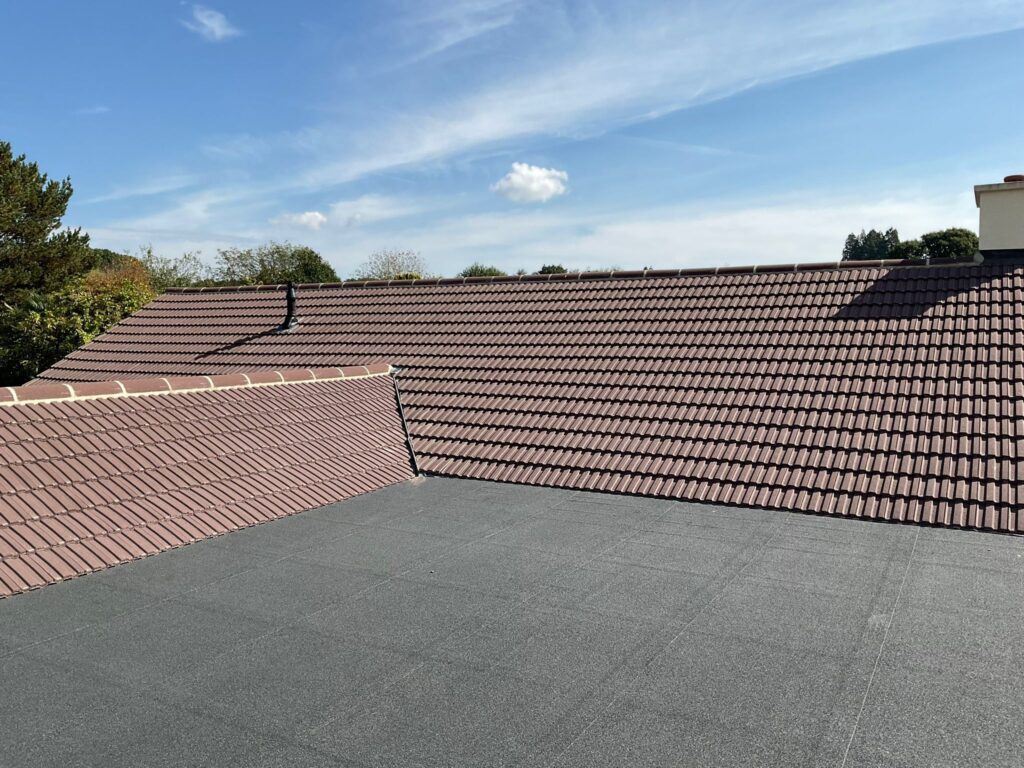
Choosing a suitable roof covering is an important part of creating a dependable residential roofing system. A roof needs to provide effective protection from the weather, complement the appearance of the property and remain practical to maintain throughout its working life. Concrete roof tiles have become a familiar choice for pitched residential roofs because they combine strength, versatility and reliable everyday performance.
For homeowners in Sturminster Newton, Hampshire, understanding the characteristics of concrete roof tiles can be useful when considering roof repairs or a new roof. Their effectiveness, however, depends on much more than the tiles themselves. Correct roof design, preparation, fixing and professional installation all contribute to the performance of the finished roof.
What Are Concrete Roof Tiles?
Concrete roof tiles are manufactured from a mixture primarily based on cement, sand and water, which is formed into individual roofing units and allowed to cure.
They are produced in various profiles and finishes, allowing them to suit different pitched roof designs and property styles.
Once installed correctly, the individual tiles overlap to form part of a weather-resistant roofing system. They work alongside other components such as underlay, battens, fixings, ridge details and flashing rather than functioning independently.
1. They Provide a Strong Roof Covering
One of the main reasons concrete tiles are suitable for residential roofing is their robust construction.
Roof coverings experience constant exposure to changing weather conditions. Tiles therefore need to maintain their integrity while protecting the roofing system beneath.
Concrete tiles provide a substantial external covering when specified and installed appropriately. Their strength makes them well suited to the everyday demands placed on residential pitched roofs.
2. They Provide Reliable Protection From Rain
A pitched tiled roof is designed so that individual tiles overlap, helping rainwater travel down the roof towards the guttering.
Correct installation is essential to this process.
The effectiveness of a tiled roof depends on factors including:
- Appropriate tile overlap
- Correct positioning
- Suitable roof pitch
- Secure fixing
- Properly constructed roof details
- Effective flashing and junctions
When these elements work together, concrete tiles form part of a dependable weather-resistant roof.
3. Concrete Tiles Are Available in Different Profiles
Not every residential roof has the same appearance or construction.
Concrete roof tiles are available in different profiles, allowing the covering to be selected according to the design and requirements of the roof.
Some profiles create a more pronounced pattern across the roof, while others provide a flatter and more understated appearance.
This flexibility makes concrete tiles suitable for a broad range of residential roofing designs.
4. They Can Complement Different Property Styles
A roof occupies a substantial visible area of most properties, so appearance matters.
Concrete tiles are available in different finishes and colours, providing options for creating a roof that works with the character of the building.
For homeowners considering a replacement roof, this means the new covering can be selected with both performance and appearance in mind rather than treating them as completely separate considerations.
5. Individual Damaged Tiles Can Often Be Replaced
Another practical advantage of tiled roofing is its modular construction.
If an individual concrete tile becomes cracked, broken or displaced while the surrounding roof remains in good condition, it may be possible to replace the affected tile without replacing the complete roof covering.
This makes localised roof repairs practical in suitable circumstances.
However, the surrounding area should still be assessed. A broken tile may be an isolated defect, but movement or deterioration elsewhere could have contributed to the problem.
6. Problems Can Often Be Identified Visually
Certain defects affecting concrete tiled roofs can sometimes be noticed from ground level.
Homeowners may observe:
- Missing tiles
- Slipped tiles
- Cracked or broken sections
- Uneven areas
- Problems around ridge tiles
- Debris from roofing materials on the ground
Recognising these warning signs can encourage earlier professional assessment.
Homeowners should not climb onto the roof to investigate suspected damage. A professional roofer can examine the affected area safely and determine what work is actually required.
7. Concrete Tiles Work Well as Part of a Complete Roofing System
The performance of a concrete tiled roof does not depend solely on the visible tiles.
Beneath and around them are several components that contribute to the overall roofing system.
These can include:
- Roofing underlay
- Battens
- Appropriate fixings
- Ridge and hip components
- Flashing
- Valleys
- Roofline and drainage details
A high-quality tile cannot compensate for poorly prepared supporting components.
Professional installation therefore considers the complete roof rather than focusing only on laying the visible covering.
Correct Roof Pitch Is Important
Concrete tiles need to be suitable for the particular roof on which they are installed.
Roof pitch influences how effectively rainfall moves across the covering and determines which tile products and installation specifications are appropriate.
This is why roofing materials should be selected according to the actual roof rather than appearance alone.
A professional roofer can consider the roof design before determining the appropriate covering and installation method.
Weight Needs to Be Considered Properly
Concrete tiles are a substantial roofing material, so the supporting roof structure needs to be suitable for the intended covering.
This becomes particularly important when replacing an existing roof with a different type of material.
Before installation, the roof should be properly assessed so that the chosen covering is appropriate for the building and roofing system.
Material selection should always form part of a considered roofing plan rather than being based solely on visual preference.
Fixing Methods Matter
Tiles need to remain correctly positioned despite regular exposure to the weather.
Appropriate fixing is therefore a fundamental part of professional installation. The correct method depends on the tile system, roof design and relevant installation requirements.
Poorly secured tiles can become vulnerable to movement, particularly during windy conditions.
Good workmanship ensures the roof covering is installed as an integrated system rather than simply placing individual tiles onto battens.
Ridge and Hip Details Need Equal Attention
The main roof slopes may cover the largest area, but smaller details are equally important.
Ridge and hip tiles occupy particularly exposed positions and need to be installed correctly as part of the overall roofing system.
If these components become loose or damaged, they can affect the weather resistance and appearance of the roof.
Professional installation and timely repairs help ensure these areas continue performing alongside the main concrete tile covering.
Flashing Protects Vulnerable Junctions
Where a tiled roof meets other building features, careful weatherproofing is required.
Flashing is commonly used around junctions to help prevent water from entering where different surfaces meet.
Even a perfectly installed field of concrete tiles cannot perform effectively if adjoining roof details are poorly constructed.
This highlights why professional roofing involves much more than the main covering.
What Causes Concrete Roof Tiles to Need Repair?
Although concrete tiles are robust, individual units can still become damaged during the life of a roof.
Possible reasons include:
- Long-term weather exposure
- Strong winds affecting vulnerable tiles
- Falling branches or debris
- Movement of individual components
- Age-related deterioration
- Damage around roof details
The correct repair depends on why the problem developed.
Replacing a visibly damaged tile may be appropriate when the defect is isolated, while repeated problems can justify a broader inspection.
Older Concrete Tiled Roofs Should Be Assessed as a Whole
A few damaged tiles do not automatically mean an older roof requires replacement.
If most of the covering and underlying roofing system remain serviceable, targeted repairs may provide an effective solution.
However, where problems repeatedly develop across different areas, a complete roof assessment becomes increasingly important.
A professional roofer can consider whether deterioration remains localised or whether multiple components are reaching the end of dependable service at a similar time.
When Might a New Concrete Tiled Roof Be Appropriate?
Roof replacement may become worth considering where deterioration is no longer confined to isolated areas.
Possible indications include:
- Frequent tile problems
- Recurring leaks
- Widespread deterioration
- Numerous previous repairs
- Problems affecting several roofing details
- Ageing underlying components
The decision should always be based on the actual condition of the roof.
A professional assessment can determine whether further repairs remain sensible or whether replacing the roofing system provides the more comprehensive solution.
Why Professional Installation Matters
Concrete roof tiles can provide dependable residential roofing, but their performance is closely connected to installation quality.
Professional roofing work involves careful attention to:
- Roof preparation
- Material suitability
- Batten positioning
- Tile alignment
- Correct overlaps
- Fixings
- Ridge and hip details
- Flashing and junctions
- Overall weather resistance
These details may not always be obvious when looking at a completed roof from ground level, but they have a major influence on how effectively the roof performs.
Why Choose MCM Roofing Repairs Sturminster Newton?
MCM Roofing Repairs Sturminster Newton provides professional roof repairs and new roofing services throughout Sturminster Newton, Hampshire.
Whether an existing concrete tiled roof has developed localised damage or the complete roofing system requires assessment, our focus is on identifying what the roof genuinely needs. We consider the condition of the covering and important surrounding components before recommending appropriate work.
For new roofs, careful preparation and professional installation ensure that the chosen roofing materials work together as part of a complete and dependable system.
Conclusion
Concrete roof tiles are well suited to everyday residential roofing because they provide a strong, practical and versatile covering for appropriately designed pitched roofs. Their range of profiles and finishes also allows them to complement different property styles, while individual damaged tiles can often be repaired or replaced when problems remain localised.
However, the tiles are only one part of a successful roof. Underlay, battens, fixings, flashing, ridge details and professional workmanship all contribute to long-term performance.
For homeowners in Sturminster Newton, Hampshire, considering repairs to an existing concrete tiled roof or planning a new roof, MCM Roofing Repairs Sturminster Newton can assess the property and provide an appropriate professional roofing solution.
Call us on: 01258 442 298
Click here to find out more about MCM Roofing Repairs Sturminster Newton
Click here to complete our contact form and see how we can help with your roofing needs.